
Freelo helped the student team break down a complex space project into manageable tasks and coordinate the work of six members to develop an app for the ISS.
 For Freelo asks Karolína Petrželová
 Richard Cvrkal is responsible for VŠMT.cz
Published:
It is a European Space Agency's Astro PI project targeting young people under the age of nineteen. It's actually a tender for software written in Python that will run on the International Space Station (ISS) on a Raspberry Pi computer. The computer is equipped with various sensors and a camera that captures the Earth. The use of this hardware had to be invented and programmed. Because we are a military high school, we cooperate with the University of Defense Brno (UNOB). And it was the staff of the Faculty of Military Technology who came to us in the autumn of 2019 with an offer to participate in this project.
Our program ran on April 8, 2020 in space on the ISS. This is a beautiful and big icing on the cake, which is the based on our work and Freelo.
They came to our school, made a presentation for those interested, and we took time to think about it. I've been running a programming club at our school for a few years. We use the C language and a personal computer. The idea ”to switch" the club from ”C" to Python offered itself. Every year we start the club from scratch with new people. So this year we all started from scratch, including me. I knew neither Python nor Raspberry, but I promised to teach them all. It looked like our ”rocket" was going to explode right off the launch pad.
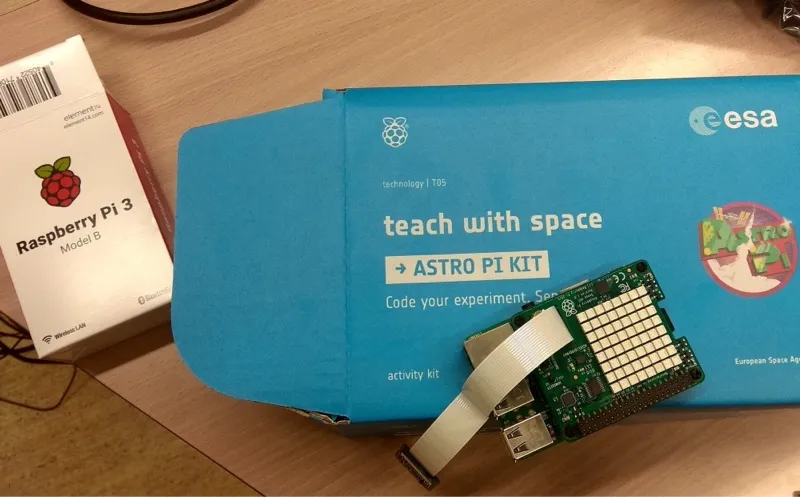
According to the propositions, the team can have 2-6 members. In the beginning, there were almost two teams interested and we considered creating them. Over time, however, the number of students has stabilized at six, and we would rather form one larger team than two small ones.
Our first task was to find a topic. In this phase, the staff from the Faculty of Development helped us a lot. UNOB technology under the leadership of Lt. Col. Radim Bloudíček, who was the supervisor of the entire project. They explain the issue and gave us our possibilities. They have been our advisors all along (and in fact they still are, because in May 2020 the project is not finished yet).
Distance learning divided students very quickly. For the hardworking and the sloppy - those who are looking for a solution to the problem and who are looking for excuses.
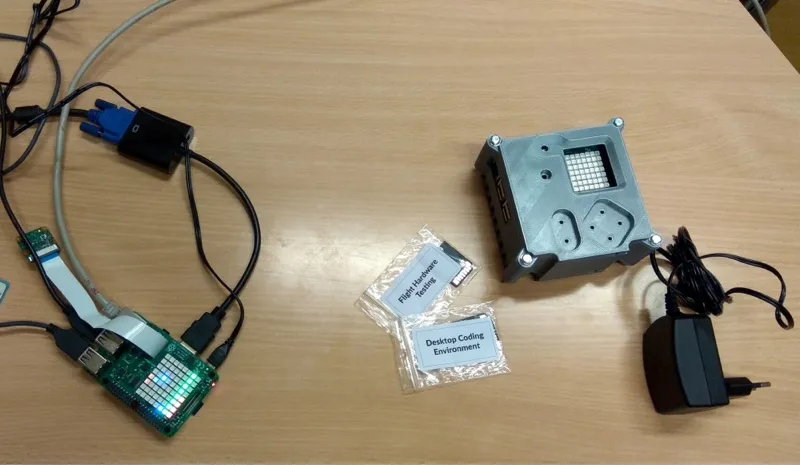
In the end, we decided to use a accelerometer and a magnetometer, two sensors that expand the capabilities of the Raspberry minicomputer. Our application captures and records the current position of the ISS and displays it on the LED matrix display. The application will run for 180 minutes, and when finished, the data will be sent to Earth for further processing. One result will be to determine the deviation of the actual ISS trajectory from the ideal.
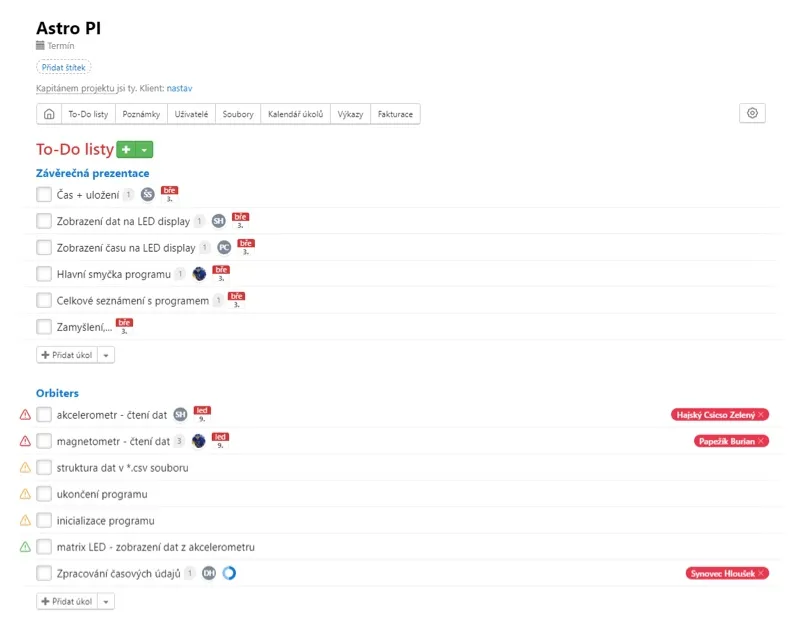
I consider the creation of my own application to be the greatest success. It should be noted that in October 2019, none of us knew anything about Python, and the team members didn't even know anything about programming. And in February 2020, essentially after four months, they submitted a functional application.
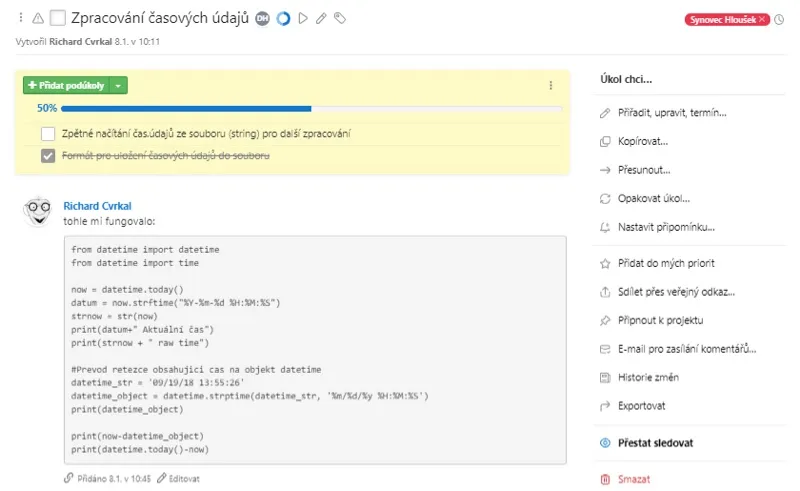
We had to start literally from scratch. They learned things like loops, conditions, saving data to a file and much more, which is a matter of course for anyone who has already programmed something. Immediately after mastering the basic syntax, we began working on the app.
The deadline was in February, so the whole of January ”was spent working in two shifts to make it happen. I consider the commitment and interest that the project was able to generate in them to be the biggest success.
The fact that April 8, 2020 our program ran in space, on the ISS, is a beautiful big icing on the cake, which is the basis of our work.
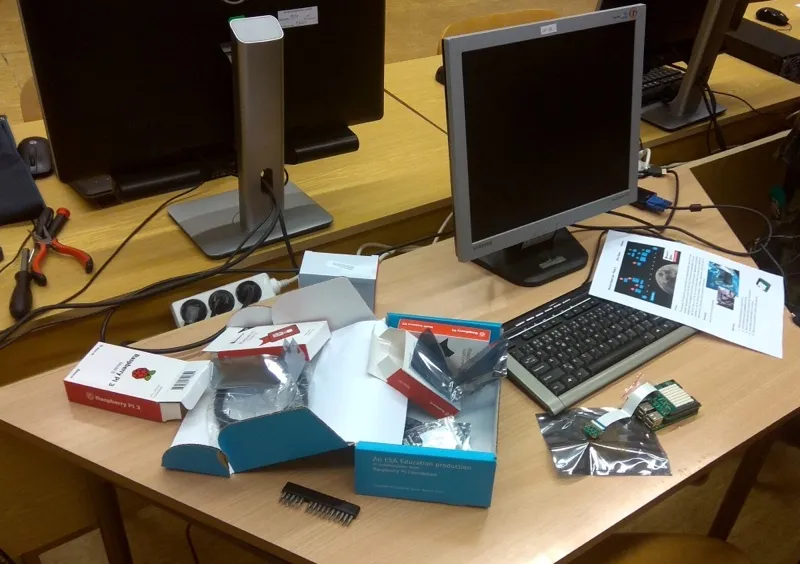
Our application was divided into separate parts and each was processed by one group. The boys somehow naturally split into three pairs, and each always worked on one task.
I also use Freelo for my personal projects, and when I was planning the work of our team, I thought of using it. I thought I'd try to lead a team of developers and guys would try teamwork through online collaboration tool.
Controlling Freelo was not a problem, they mastered it very quickly. I think that Freelo passed, but we, as its users, failed. For myself, I see the failure in the absence of rules on how Freelo will be used, what, who and where will write. I should have done that right from the start. But even I didn't have a concrete idea of how it should work. Everything was quite hectic and everything was handled immediately and personally on the spot. There was no working outside the time and space of the circle and no need to have a communication base. We just needed a ”warehouse" of notes that everyone could go to.
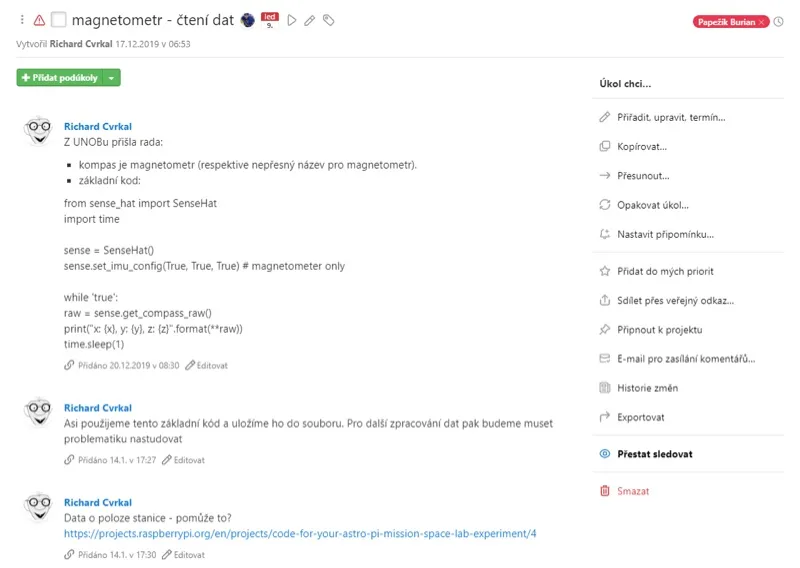
We created individual tasks and assigned them to groups. We had an overview of who is responsible for what. We didn't get to the full use of Freelo.
Thanks to Freelo, the students saw and understood that every big (and perhaps seemingly unsolvable) task can be divided into several smaller ones and even smaller ones, and these can be solved.
There was no set ”staff culture", there was no complete overview of who had finished what and what was left to finish. If the person in question didn't come to the circle, no one could continue on their assignment that day.
It was completely hassle-free and fast. Students in general can do a lot if they want to. If they do not want… 🙂
Thanks to Freelo, students have seen and understood that every big (and perhaps seemingly unsolvable) task can be divided into several smaller ones and even smaller ones, and these can already be solved . Freelo, as a tool, made this understanding easier for them, and only sometime in their lives will they begin to discuss big tasks, perhaps remember where they learned it. 🙂
Distance learning came quickly and unexpectedly. The first information went to the students through the Bachelors and Moodle was also widely used. I mostly solved questions by e-mail, and if anyone wanted, we used Skype. Communication with students varied according to teachers.
One positive thing about the current situation is: The planned implementation of Office 365 for teachers and students has been significantly accelerated. We could all start using them, at least in part, during distance learning. Our IT administrator had a few night shifts. 🙂
I don't know if it learned, but I gained two insights:
I am very curious to see how what we are currently experiencing will be reflected in the thinking and plans of both individuals and organisations.